Before you choose a style of loft conversion, there is an earlier question that decides everything that follows: what kind of roof do you have?
In London’s mix of Victorian terraces, 1930s semis and post-war homes, the roof structure sitting above your ceiling determines how much usable space you can win, how much building work it takes to get there, and ultimately what it costs.
This guide walks through the roof types found on London homes, how each one converts, and how to tell whether your roof is suitable in the first place. Once you know your roof will work, you can move on to choosing a style from our full guide to the types of loft conversions in London.
Why your Roof Type Decides Your Loft Conversion
Two houses on the same street can offer very different loft conversions, purely because of how their roofs were built. The roof sets three things at once. It sets your usable head height, because a steep, high roof gives you far more standing room than a shallow one. It sets the amount of structural work, because some roofs are effectively hollow and ready to convert while others are braced with timber that has to be removed and replaced with steel. And it sets your planning route, because changing a roofline (a mansard or a hip-to-gable, for example) is treated differently from working within the existing shape.
Get the roof assessment right and the rest of the project is predictable. That is why our first step on any London loft is a survey of the roof itself, measuring the ridge height, checking the structure and confirming what your roof can carry.
The Roof Types on London Homes, and What Each One Allows
Traditional “Cut” Roofs (rafters and purlins)
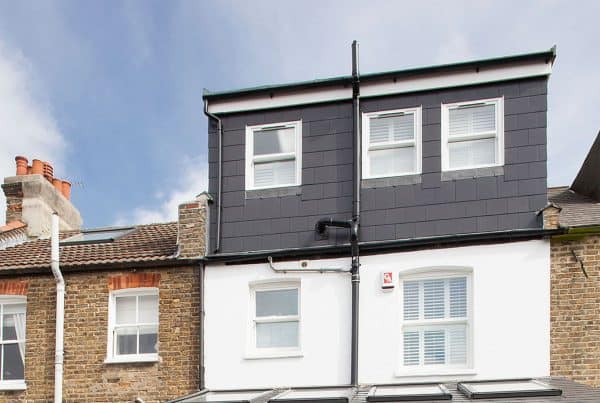
Most period London homes, Victorian and Edwardian terraces especially, have a traditional cut roof. This was built on site, timber by timber, with rafters running to a ridge and purlins bracing them. The key point for you is that the loft space beneath is largely open. There are no webs criss-crossing the middle, so there is usable volume from the start. Cut roofs are the most straightforward to convert, which is one reason loft conversions are so common across London’s terraced streets. A dormer loft conversion sits naturally on this type of roof, adding headroom and floor area at the rear.
Trussed Rafter Roofs (Modern)
Homes built from roughly the 1960s onwards often have prefabricated trussed rafters, W-shaped timber frames craned into place. They are efficient to build but they fill the loft with structural timber, so the space is not immediately usable. This does not mean your loft cannot be converted. It means the conversion involves more structural work: a structural engineer designs a new arrangement, typically steel beams and new floor joists, so the roof loads can be carried without the original webs, which are then removed. It’s a well-established process and a large share of London conversions are on trussed roofs. It simply carries more cost than a cut roof, and the structure has to be signed off correctly, which is why the structural integrity of a loft conversion matters so much on this roof type.
Hip Roofs
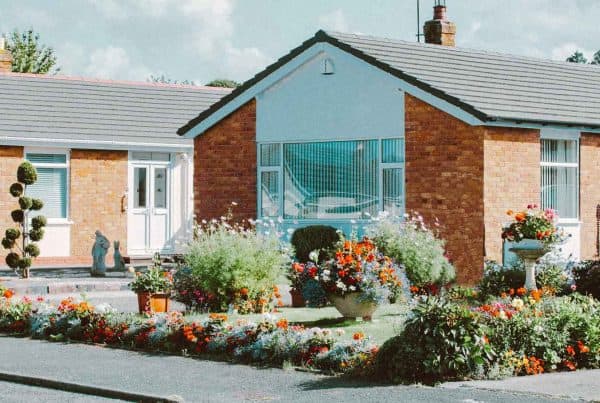
A hip roof slopes inwards on all sides rather than ending in a flat vertical wall. That inward slope eats into the volume at the ends of the loft, so you get less usable floor area than an equivalent gable roof. The common solution in London is to extend one sloping “hip” up to a vertical hip-to-gable loft conversion, which squares off that end of the roof and unlocks a significant amount of extra space. Hip roofs are typical on many 1930s semis and detached homes around outer London.
Gable and Mansard Roof Forms
A gable roof ends in a vertical triangular wall at each end, which tends to give good usable volume along the length of the loft. A mansard is a steeper roof form with near-vertical sides, and where the existing roof shape is limiting, rebuilding it as a mansard creates the maximum possible space and headroom, though it usually needs planning permission. Both of these are as much about the style of conversion as the roof itself, so once you know your roof can take it, compare them properly in the types of loft conversions in London hub.
Flat and Low-Pitch Roofs
If part of your home has a flat or very low-pitch roof, a conventional loft conversion may not be possible in that section simply because there is not enough height to stand in. The options here are different: a new structure to create the height, a rear dormer where the main roof allows, or in some cases adding a storey. A survey is essential before assuming a flat-roof section can or cannot be used.
How Roof Pitch and Head Height Affect Feasibility
The single most useful measurement is the head height: the distance from the top of your existing ceiling joists up to the underside of the ridge. As a working guide, you want in the region of 2.2 to 2.4 metres of height to create a comfortable, regulations-compliant room, remembering that building regulations require adequate headroom over the new staircase as well as in the room itself.
Pitch matters because it governs how much of your floor area actually has that height. A steep roof holds its height across more of the floor, giving you a larger usable room. A shallow roof pinches in quickly, so even if the ridge is tall enough at the centre, the usable footprint is smaller. Where pitch or height is marginal, this is exactly where dormers, a roof lift or a mansard come in, since each adds height and volume that the existing roof does not provide on its own.
Is My Roof Suitable for a Loft Conversion?
Most London roofs can be converted in some form. To gauge yours before a survey, check the following:
- Head height: measure from the ceiling joists to the ridge. Around 2.2 metres or more is a good sign; less than that usually points towards a dormer, roof lift or mansard.
- Roof structure: an open loft with rafters and purlins (a cut roof) is the most straightforward; a loft filled with W-shaped trusses is still convertible but needs structural work.
- Roof pitch: the steeper the roof, the more of the floor area you can actually use.
- Staircase space: there must be room, usually on the floor below, for a compliant staircase up to the new level.
- Obstructions: water tanks, chimney breasts and services can usually be relocated, but they affect the layout and cost.
- Planning context: conservation areas, listed buildings and some boroughs’ rules can shape what is allowed, particularly for roofline changes.
If you are unsure on any of these, that is what the survey is for. We will tell you plainly what your roof allows.
From Roof Type to Conversion Type: Where To Go Next
Once you know your roof will work, the next decision is the style of conversion. See our full guide to the types of loft conversions in London to compare dormer, hip-to-gable, L-shaped and mansard options side by side, and get a sense of budget from our guide to the average loft conversion cost. When you are ready for an answer specific to your home, speak to our loft conversion specialists in London and we will survey your roof, confirm what it can carry and set out your options, with no obligation.
Book a free roof survey: call 0203 950 7957 or get in touch.
FAQs
What roof types are suitable for a loft conversion?
Most are. Traditional cut roofs, common on London’s Victorian and Edwardian terraces, are the easiest to convert because the loft space is already open. Modern trussed roofs can also be converted, but need structural work to replace the trusses with steel and new joists. Hip, gable and mansard roofs all convert well, sometimes with a roofline change to add space. Only very low or flat roof sections may be unsuitable without adding height.
Can you convert a trussed (modern) roof?
Yes. A trussed roof is filled with structural timber, so it is not immediately usable, but a structural engineer can design a new arrangement, typically steel beams and new floor joists, that carries the roof loads without the original trusses. Those are then removed to open up the space. It costs more than converting a cut roof, but it is a routine part of loft conversions on newer London homes.
Does roof pitch affect whether I can convert my loft?
It does. A steeper pitch holds usable head height across more of the floor, giving you a larger room. A shallow pitch narrows the usable area quickly. Where the pitch is limiting, a dormer, roof lift or mansard adds the height and volume the existing roof lacks.
What is the best roof type for a loft conversion?
A traditional cut roof with a steep pitch and good ridge height gives the most usable space for the least structural work, which is why period terraces convert so well. That said, almost any roof can deliver an excellent conversion with the right design, so the best approach is a survey of your specific roof rather than a rule of thumb.